Carved Oak Figure of Saint James the Greater c.1470-1520
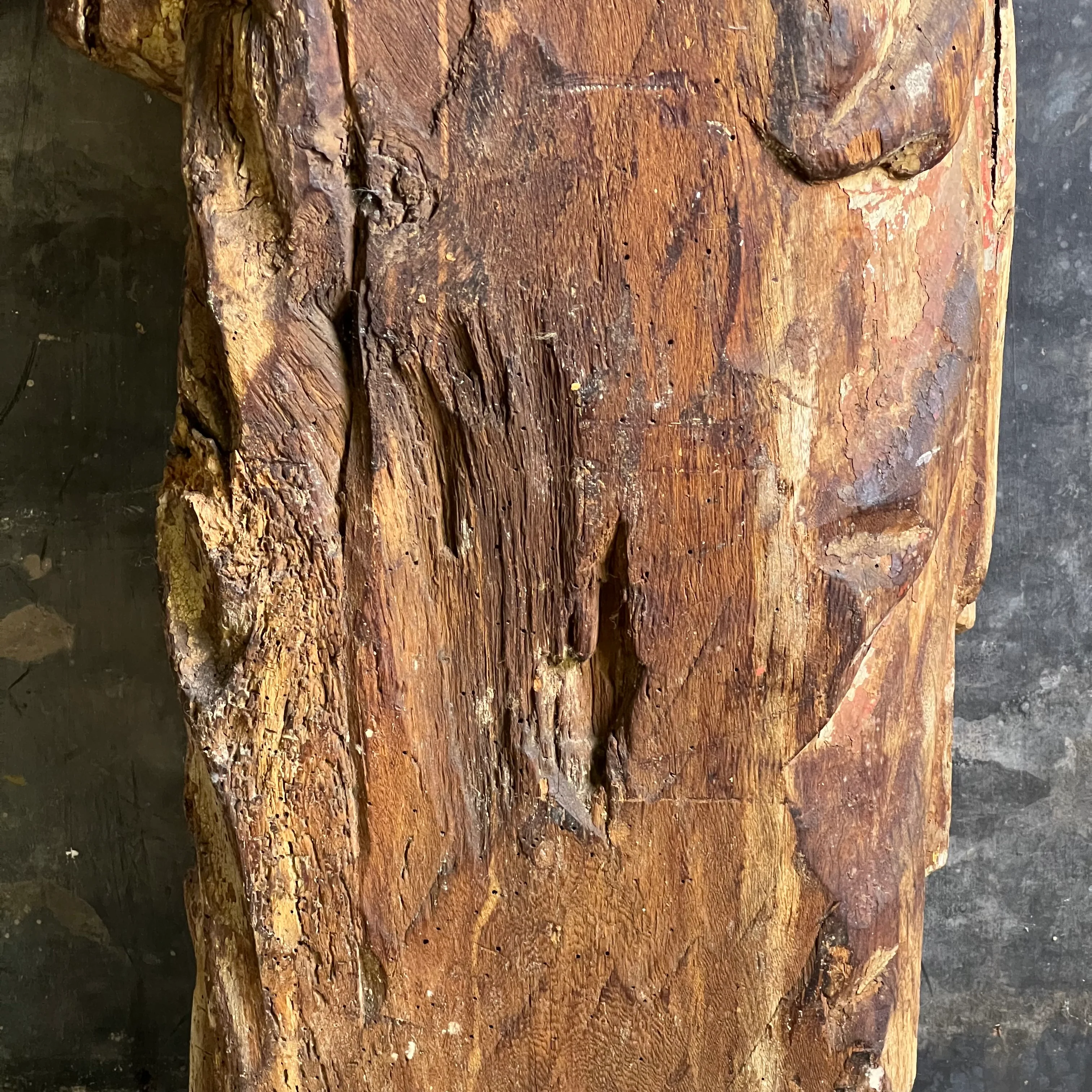
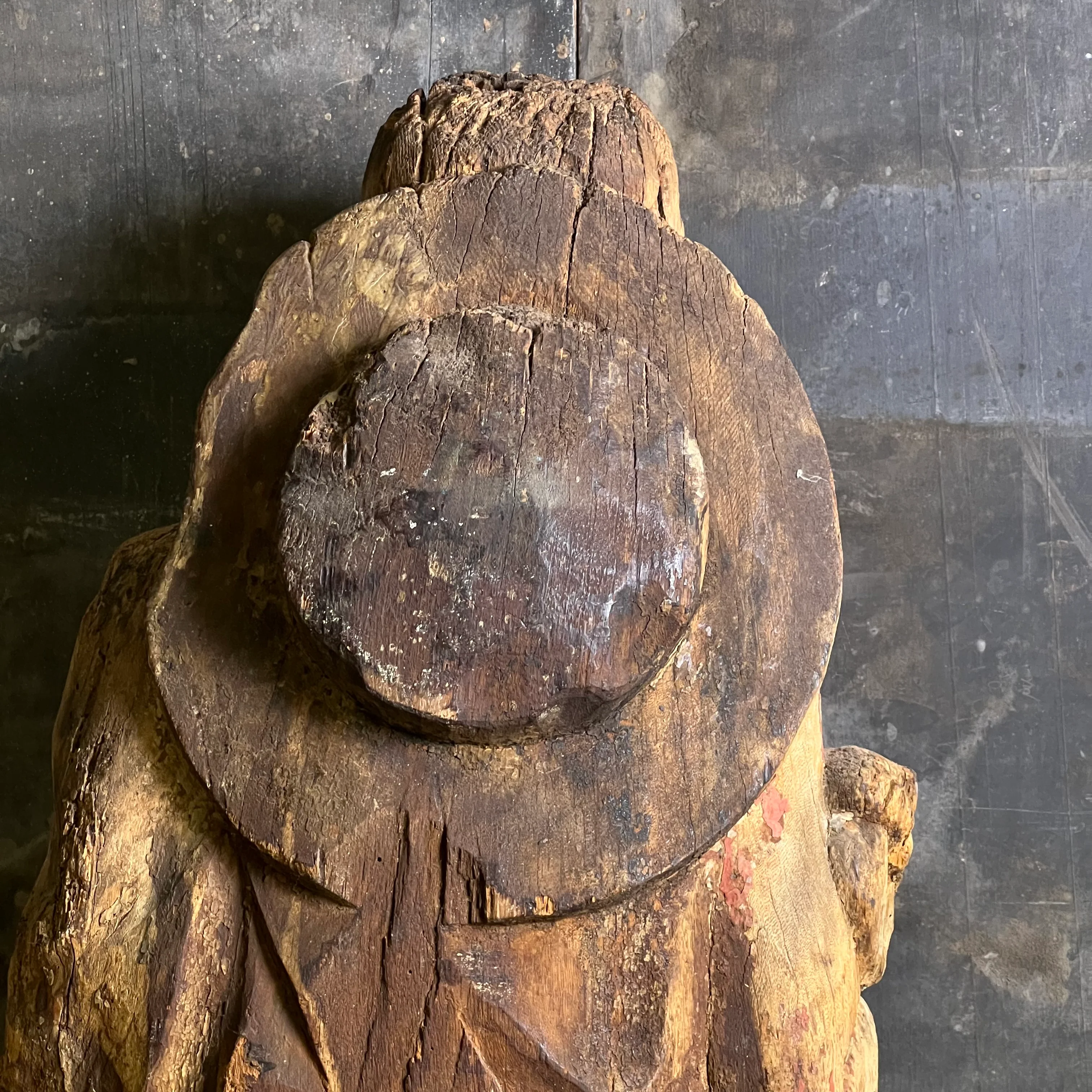
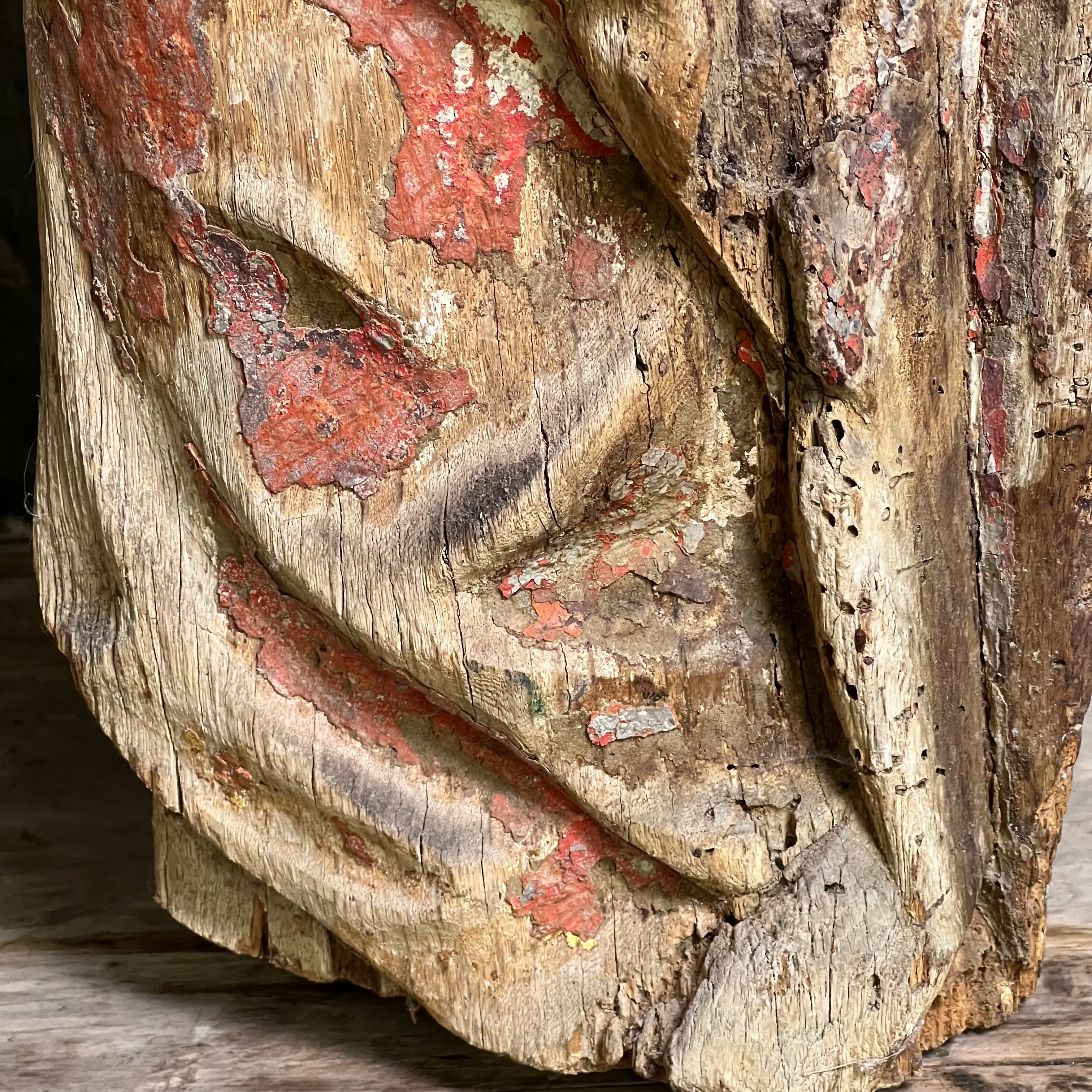
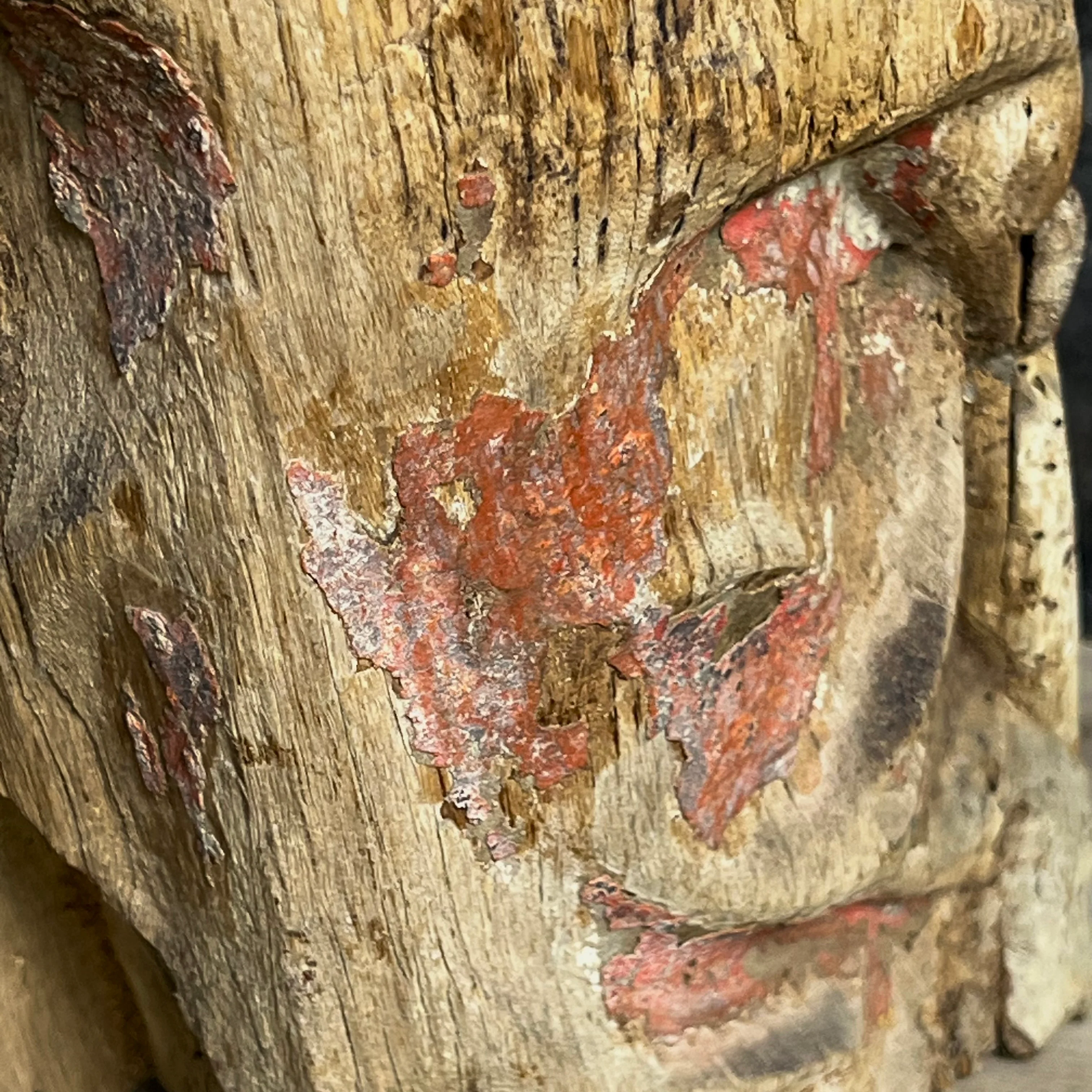
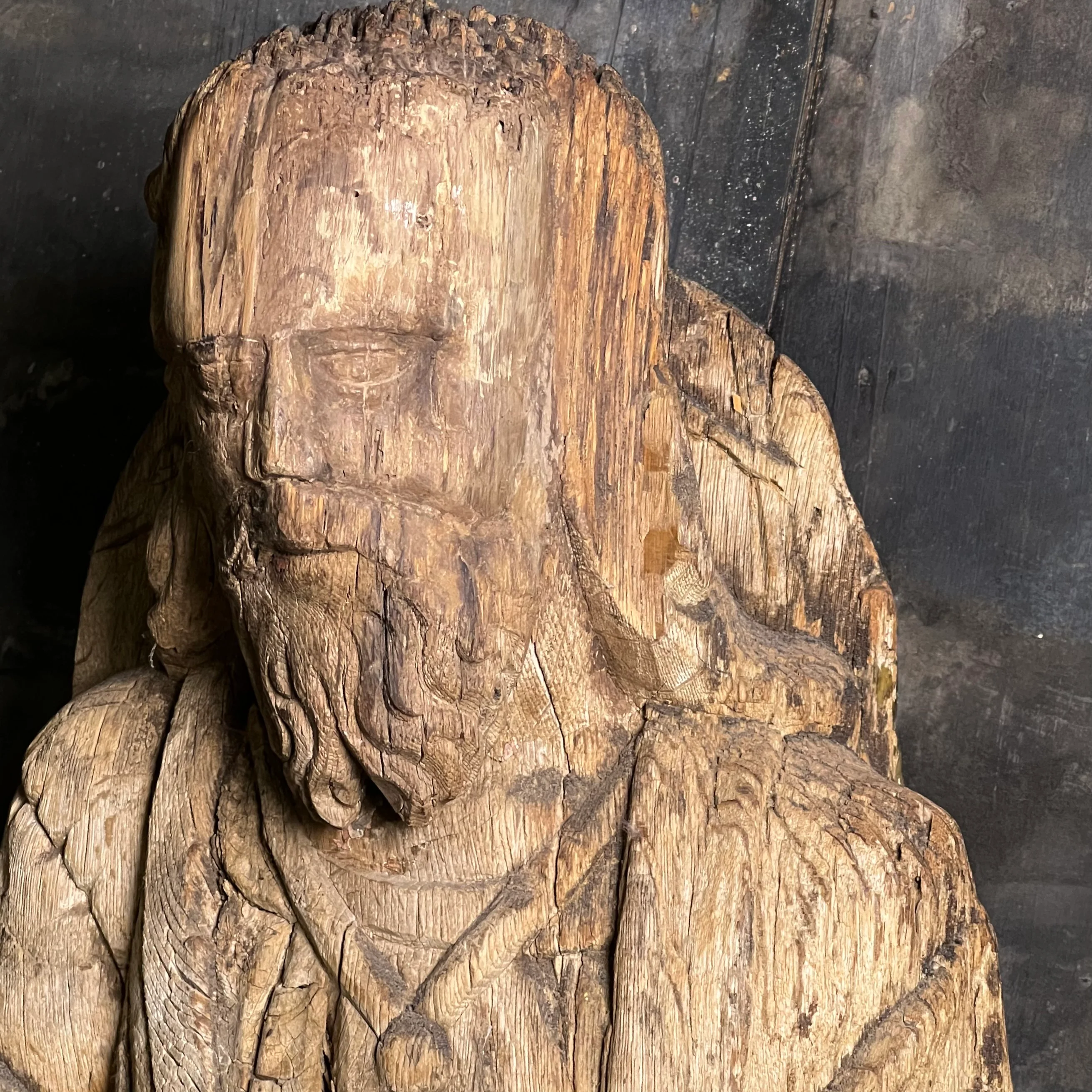
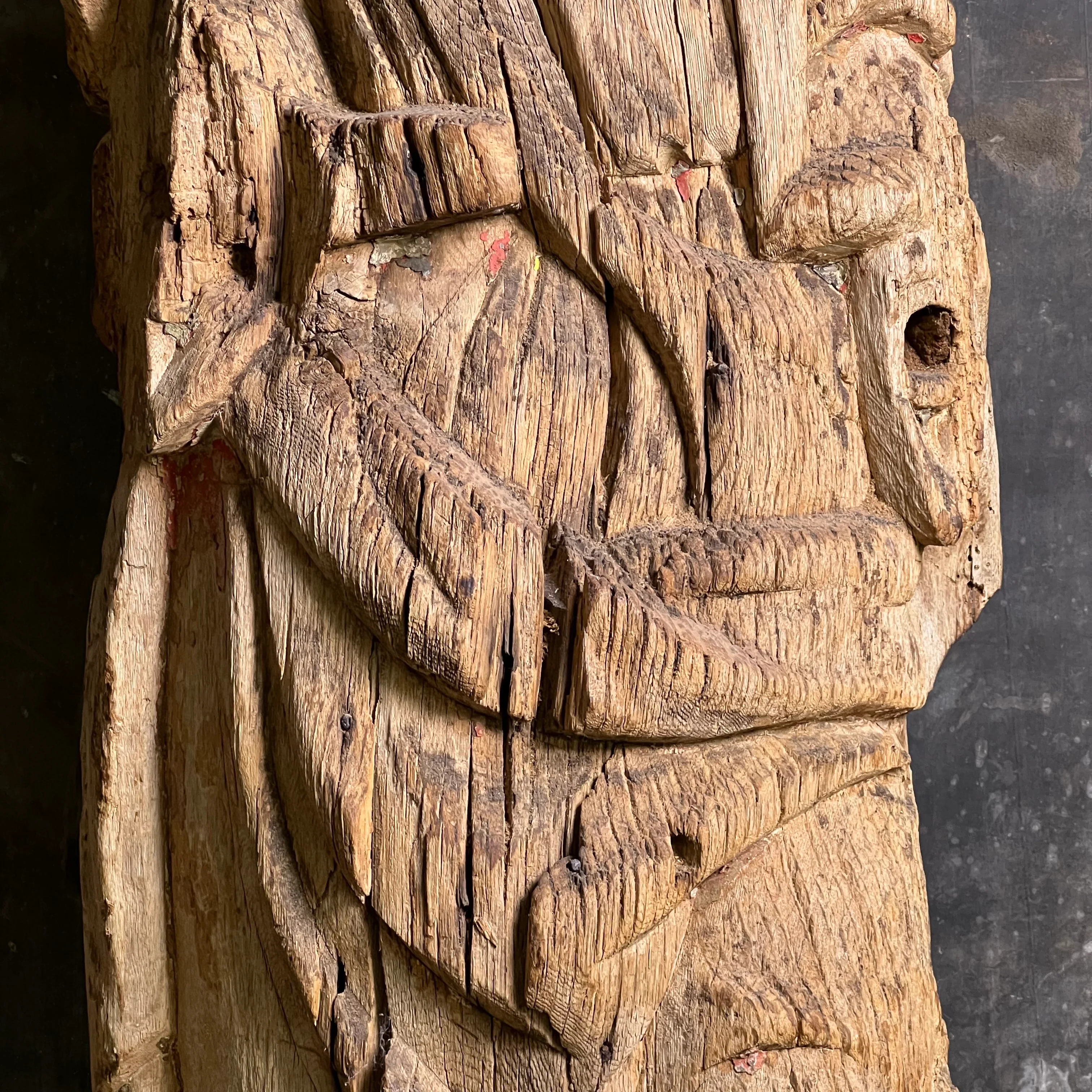
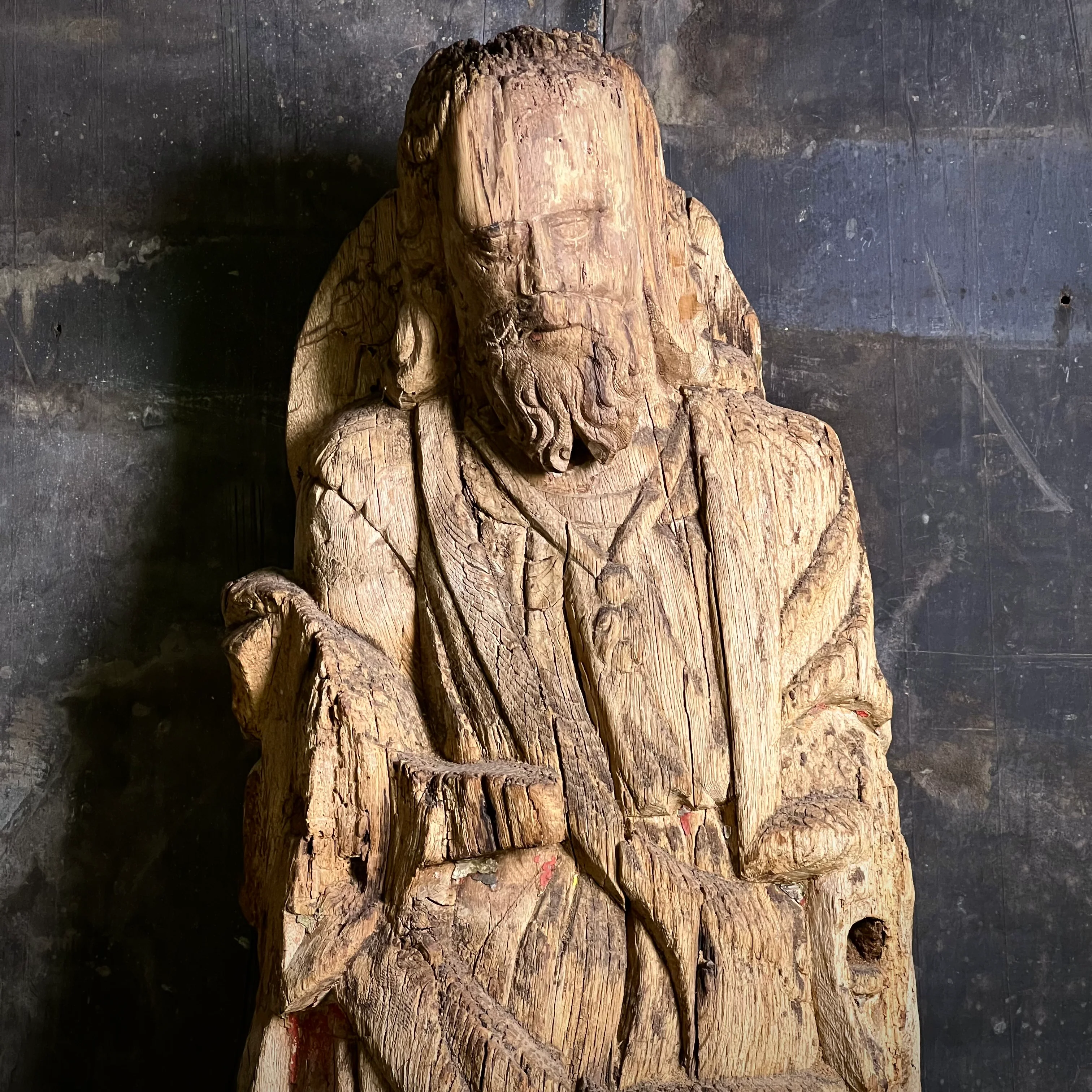
A late Gothic carved oak figure depicting a male saint, most probably Saint James the Greater, shown in his traditional guise as a pilgrim. The saint wears a broad-brimmed pilgrim’s hat and a voluminous cloak, with gentle traces of the original red polychromy visible in the folds of the drapery.
Carved in oak around 1470–1520, Northern European, probably in Flanders or western Germany, the figure was created for placement within a church niche or altarpiece, its reverse left plain for wall mounting. Over centuries of devotion and exposure, the features have softened and the surface worn smooth, leaving a wonderfully time-worn patina. The erosion and pigment loss are entirely consistent with age and lend the sculpture a quiet, contemplative presence that speaks to its long history.
Representations of Saint James the Greater are comparatively uncommon in Northern European Gothic sculpture. His depiction as a pilgrim apostle — wearing a broad-brimmed hat and flowing mantle — reflects the enduring importance of pilgrimage to Santiago de Compostela and its relatively rare portrayal north of the Alps. The surviving red tones, symbolic of martyrdom, further support this attribution.
A closely related oak carving of Saint James, attributed to the late fifteenth-century Netherlandish school, is preserved in the Rijksmuseum, Amsterdam (inv. no. BK-2012-86), sharing the same distinctive headgear and rhythmic drapery.
Though softened by time, the figure retains a remarkable sculptural presence — the mellowed oak surface, vestiges of colour, and gentle poise together creating a profoundly evocative survival of late Gothic devotion.
Original: $12,640.42
-70%$12,640.42
$3,792.13More Images











Carved Oak Figure of Saint James the Greater c.1470-1520
A late Gothic carved oak figure depicting a male saint, most probably Saint James the Greater, shown in his traditional guise as a pilgrim. The saint wears a broad-brimmed pilgrim’s hat and a voluminous cloak, with gentle traces of the original red polychromy visible in the folds of the drapery.
Carved in oak around 1470–1520, Northern European, probably in Flanders or western Germany, the figure was created for placement within a church niche or altarpiece, its reverse left plain for wall mounting. Over centuries of devotion and exposure, the features have softened and the surface worn smooth, leaving a wonderfully time-worn patina. The erosion and pigment loss are entirely consistent with age and lend the sculpture a quiet, contemplative presence that speaks to its long history.
Representations of Saint James the Greater are comparatively uncommon in Northern European Gothic sculpture. His depiction as a pilgrim apostle — wearing a broad-brimmed hat and flowing mantle — reflects the enduring importance of pilgrimage to Santiago de Compostela and its relatively rare portrayal north of the Alps. The surviving red tones, symbolic of martyrdom, further support this attribution.
A closely related oak carving of Saint James, attributed to the late fifteenth-century Netherlandish school, is preserved in the Rijksmuseum, Amsterdam (inv. no. BK-2012-86), sharing the same distinctive headgear and rhythmic drapery.
Though softened by time, the figure retains a remarkable sculptural presence — the mellowed oak surface, vestiges of colour, and gentle poise together creating a profoundly evocative survival of late Gothic devotion.
Product Information
Product Information
Shipping & Returns
Shipping & Returns
Description
A late Gothic carved oak figure depicting a male saint, most probably Saint James the Greater, shown in his traditional guise as a pilgrim. The saint wears a broad-brimmed pilgrim’s hat and a voluminous cloak, with gentle traces of the original red polychromy visible in the folds of the drapery.
Carved in oak around 1470–1520, Northern European, probably in Flanders or western Germany, the figure was created for placement within a church niche or altarpiece, its reverse left plain for wall mounting. Over centuries of devotion and exposure, the features have softened and the surface worn smooth, leaving a wonderfully time-worn patina. The erosion and pigment loss are entirely consistent with age and lend the sculpture a quiet, contemplative presence that speaks to its long history.
Representations of Saint James the Greater are comparatively uncommon in Northern European Gothic sculpture. His depiction as a pilgrim apostle — wearing a broad-brimmed hat and flowing mantle — reflects the enduring importance of pilgrimage to Santiago de Compostela and its relatively rare portrayal north of the Alps. The surviving red tones, symbolic of martyrdom, further support this attribution.
A closely related oak carving of Saint James, attributed to the late fifteenth-century Netherlandish school, is preserved in the Rijksmuseum, Amsterdam (inv. no. BK-2012-86), sharing the same distinctive headgear and rhythmic drapery.
Though softened by time, the figure retains a remarkable sculptural presence — the mellowed oak surface, vestiges of colour, and gentle poise together creating a profoundly evocative survival of late Gothic devotion.