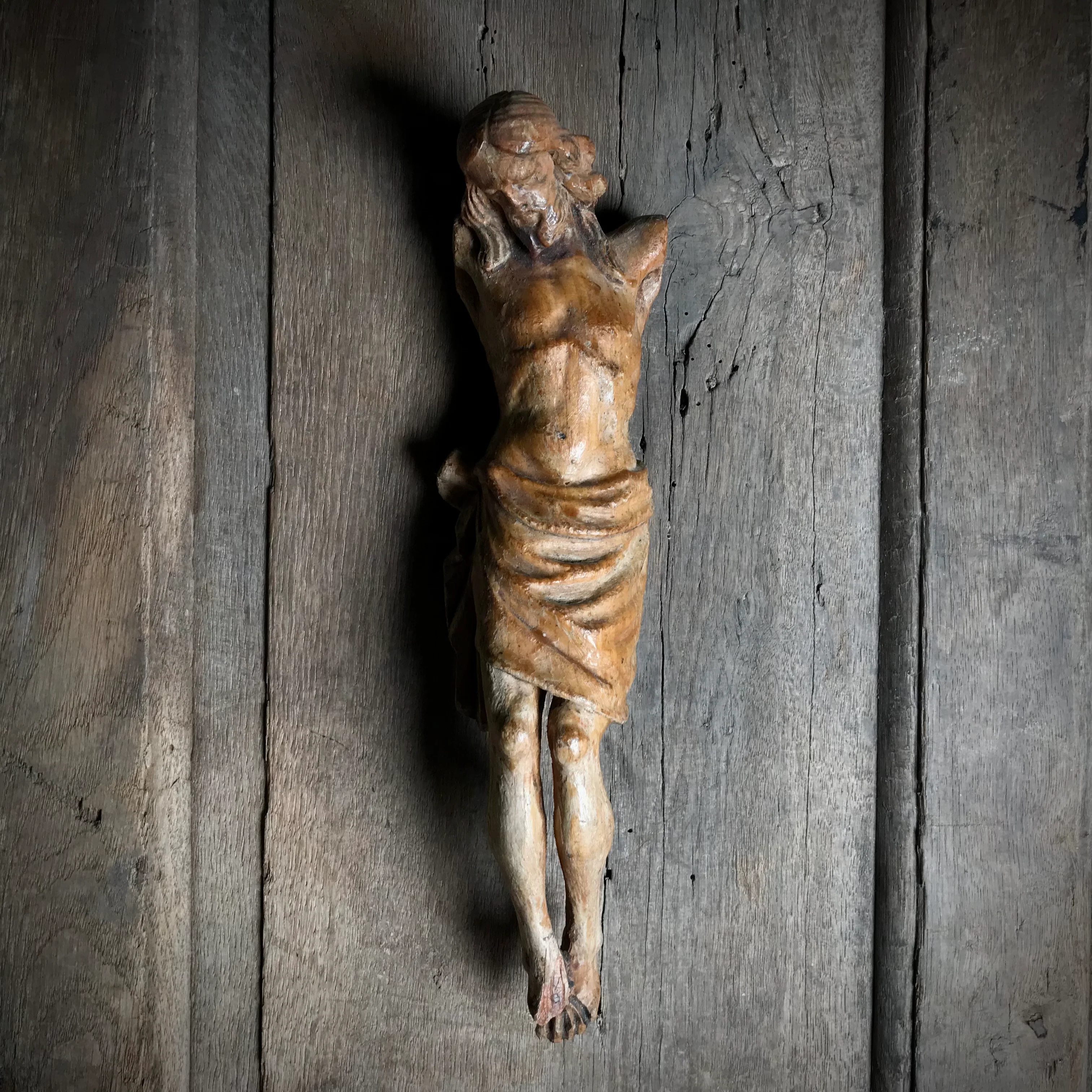
Large Baroque Carved Wooden Angel, c. 1680–1720
This beautiful carved wooden angel was originally created to be suspended within a Baroque altar or architectural frieze, forming part of a larger ecclesiastical ensemble. During the late 17th and early 18th centuries, Central Europe — particularly regions corresponding to present-day Bavaria, Austria, and the Alpine territories — was a centre of highly accomplished Baroque church sculpture. Figures of this type were designed to be viewed from below, hovering within altar structures and engaging directly with light, space, and movement.
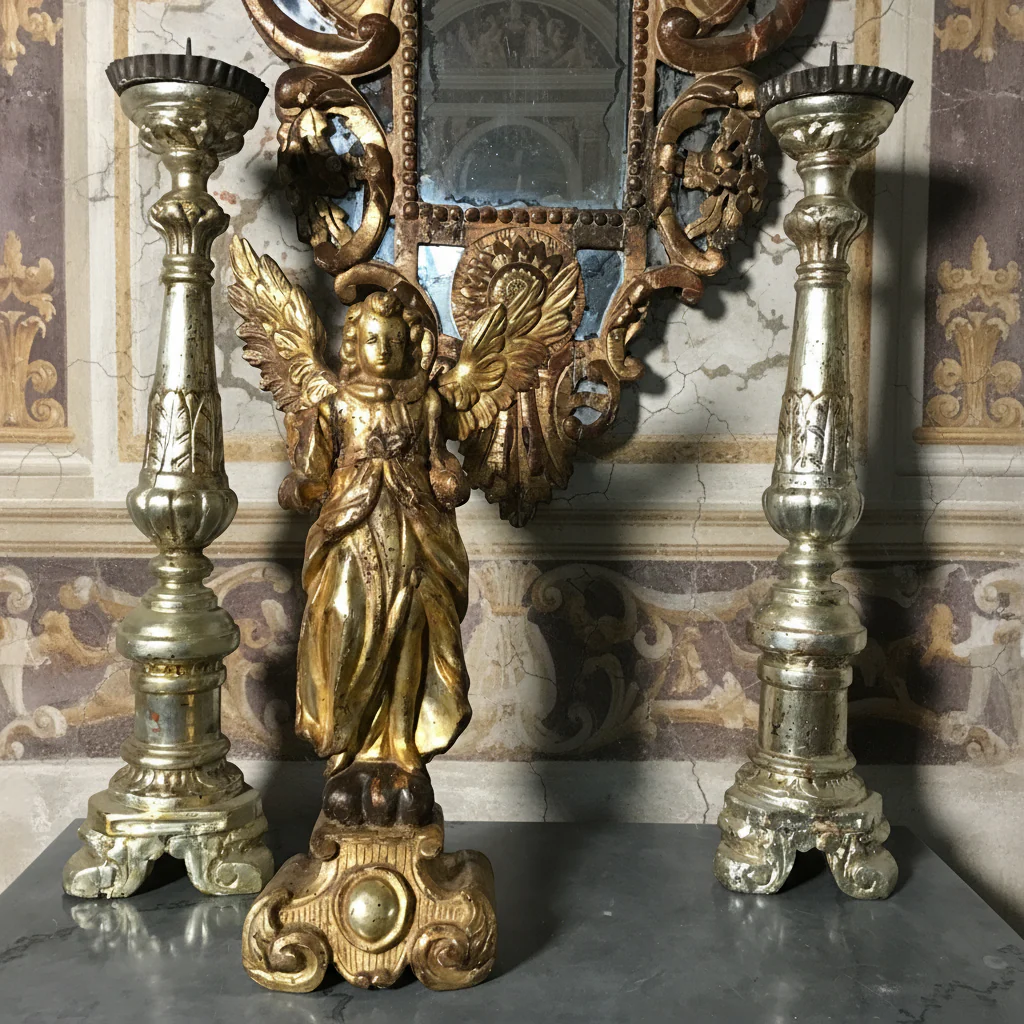
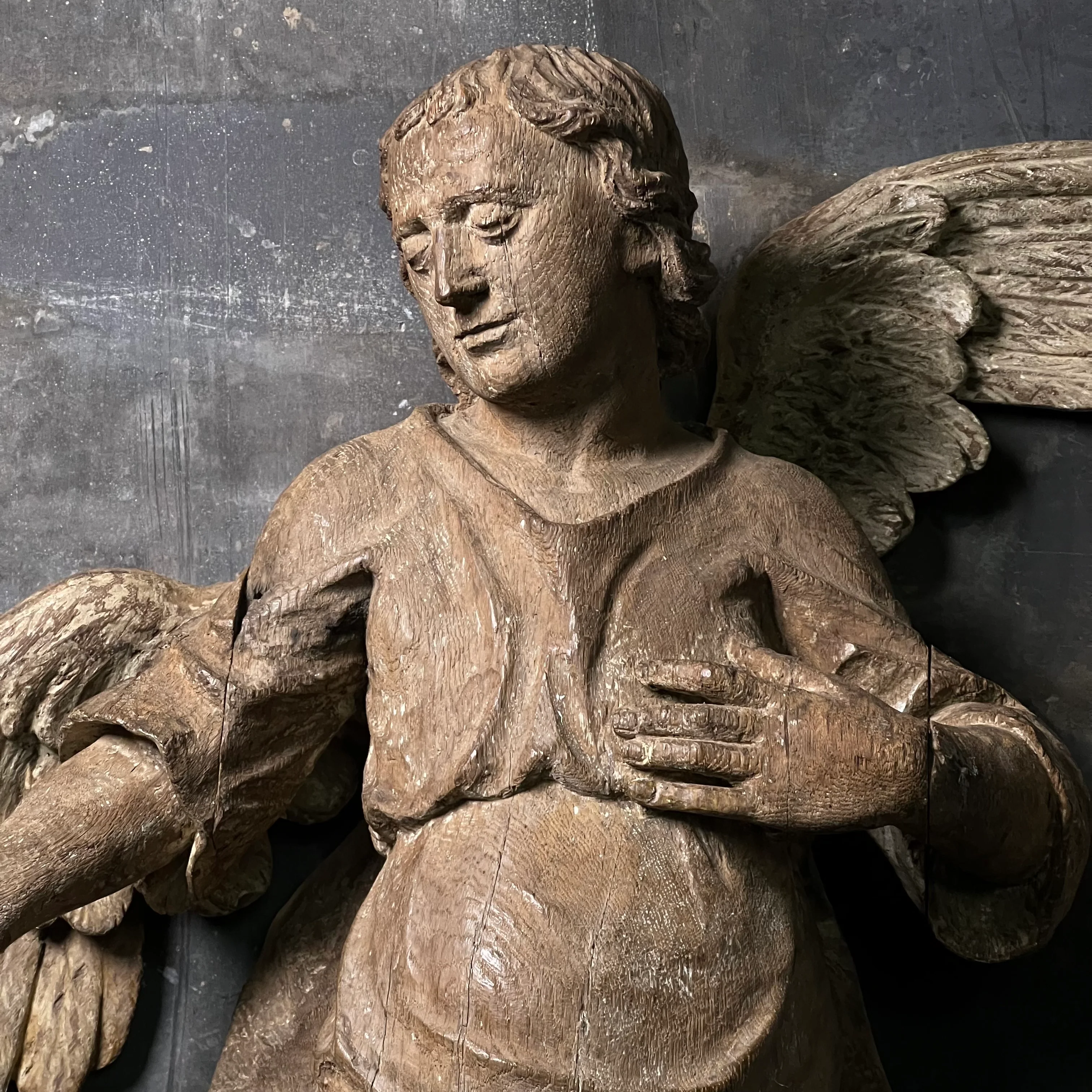
The angel survives in a complete state, retaining its original hands, feet, and wings — an increasingly rare feature for sculpture of this type. The hair is formed in thick, rhythmic locks, lending weight and balance when viewed in elevation, while the flowing drapery and extended wings create a magical sense of movement and lightness.
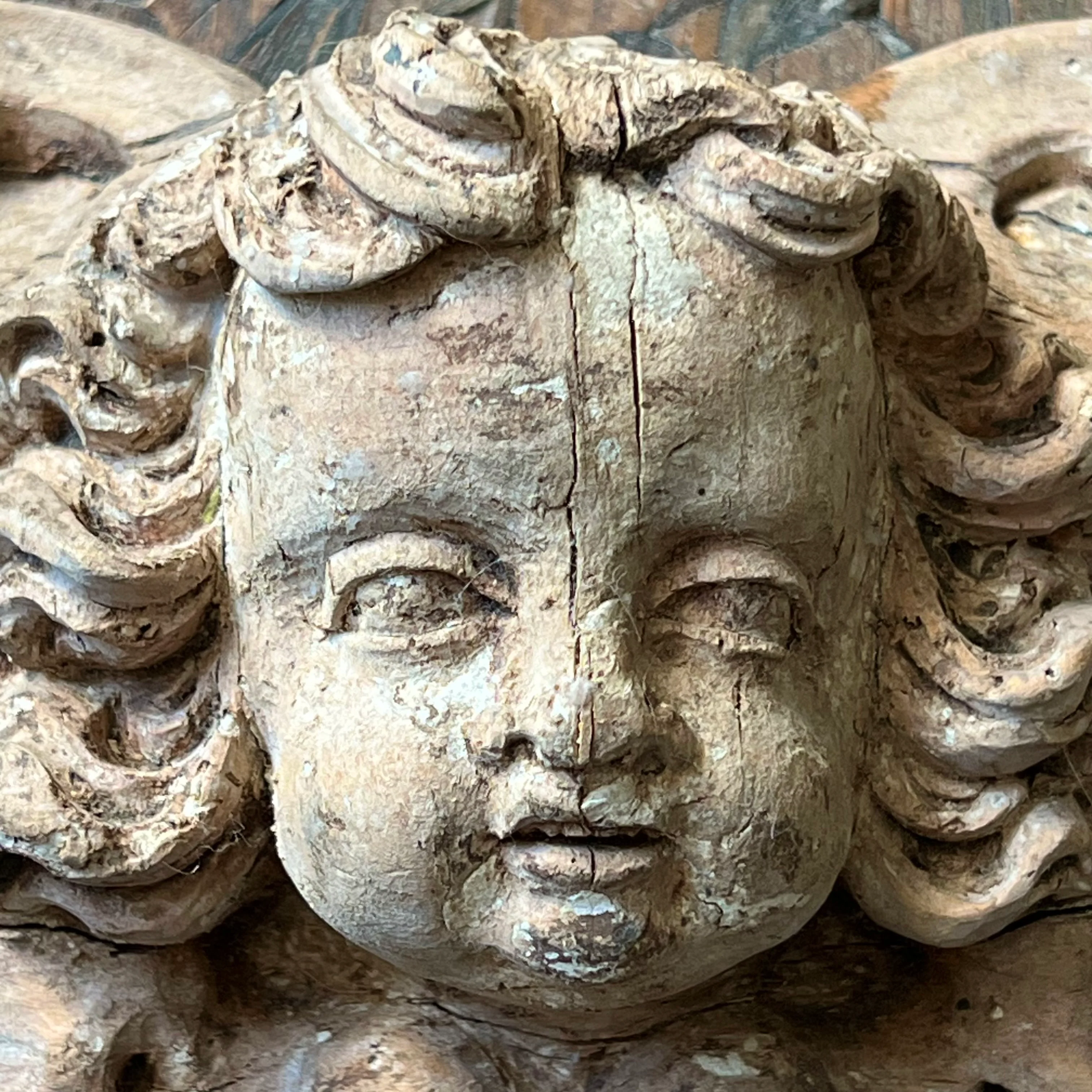
Carved with a gentle, inward expression, its softly modelled face and heavy-lidded eyes conveying a sense of stillness and reflection. Unlike the theatrical drama associated with Italian Baroque sculpture, or the playful exuberance of the later Rococo period, the angel has a restrained and poetic character, emphasising its devotional, ethereal presence.
Once part of a sacred architectural whole, the angel now stands as sculpture in its own right, retaining a calming and watchful presence — protective, poetic, and deeply atmospheric.
Original: $7,717.31
-70%$7,717.31
$2,315.19More Images


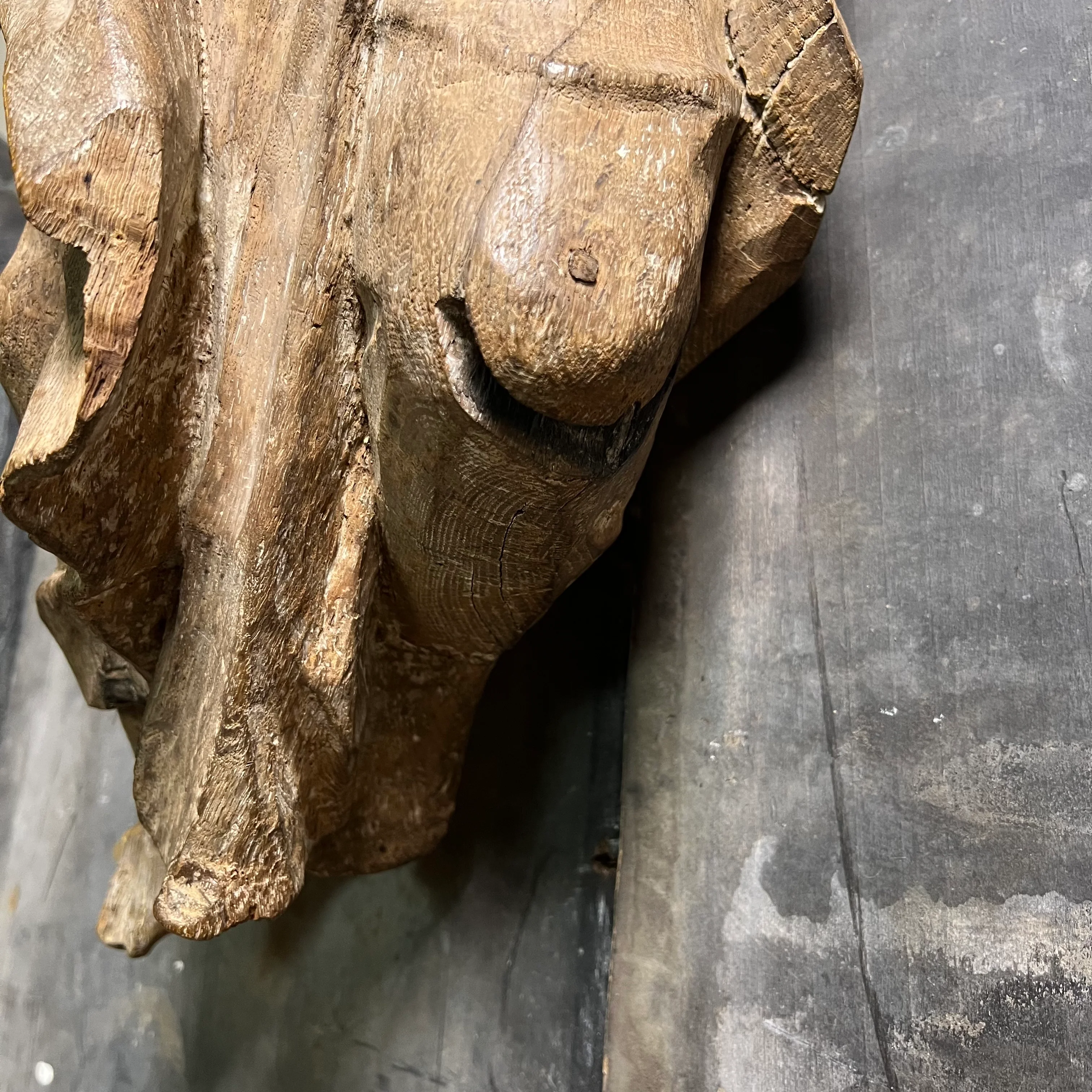




Large Baroque Carved Wooden Angel, c. 1680–1720
This beautiful carved wooden angel was originally created to be suspended within a Baroque altar or architectural frieze, forming part of a larger ecclesiastical ensemble. During the late 17th and early 18th centuries, Central Europe — particularly regions corresponding to present-day Bavaria, Austria, and the Alpine territories — was a centre of highly accomplished Baroque church sculpture. Figures of this type were designed to be viewed from below, hovering within altar structures and engaging directly with light, space, and movement.
The angel survives in a complete state, retaining its original hands, feet, and wings — an increasingly rare feature for sculpture of this type. The hair is formed in thick, rhythmic locks, lending weight and balance when viewed in elevation, while the flowing drapery and extended wings create a magical sense of movement and lightness.
Carved with a gentle, inward expression, its softly modelled face and heavy-lidded eyes conveying a sense of stillness and reflection. Unlike the theatrical drama associated with Italian Baroque sculpture, or the playful exuberance of the later Rococo period, the angel has a restrained and poetic character, emphasising its devotional, ethereal presence.
Once part of a sacred architectural whole, the angel now stands as sculpture in its own right, retaining a calming and watchful presence — protective, poetic, and deeply atmospheric.
Product Information
Product Information
Shipping & Returns
Shipping & Returns
Description
This beautiful carved wooden angel was originally created to be suspended within a Baroque altar or architectural frieze, forming part of a larger ecclesiastical ensemble. During the late 17th and early 18th centuries, Central Europe — particularly regions corresponding to present-day Bavaria, Austria, and the Alpine territories — was a centre of highly accomplished Baroque church sculpture. Figures of this type were designed to be viewed from below, hovering within altar structures and engaging directly with light, space, and movement.
The angel survives in a complete state, retaining its original hands, feet, and wings — an increasingly rare feature for sculpture of this type. The hair is formed in thick, rhythmic locks, lending weight and balance when viewed in elevation, while the flowing drapery and extended wings create a magical sense of movement and lightness.
Carved with a gentle, inward expression, its softly modelled face and heavy-lidded eyes conveying a sense of stillness and reflection. Unlike the theatrical drama associated with Italian Baroque sculpture, or the playful exuberance of the later Rococo period, the angel has a restrained and poetic character, emphasising its devotional, ethereal presence.
Once part of a sacred architectural whole, the angel now stands as sculpture in its own right, retaining a calming and watchful presence — protective, poetic, and deeply atmospheric.