Riace Warrior Statue with Plinth c.1920
A rare model depicting one of the Riace Warriors from Greek Classical Antiquity. c.1920
The Riace bronzes, also called the Riace Warriors, are two full-size Greek bronzes of naked bearded warriors, cast around 460–450 BC. They were discovered in the sea in 1972 near Riace, Calabria, in southern Italy. The bronzes are now housed in the Museo Nazionale della Magna Grecia in the nearby city of Reggio Calabria. They are two of a very few surviving life-scale ancient Greek bronzes. They demonstrate superb technical craftsmanship and exquisite artistic accomplishments that were able to be achieved at this period in time. They belong to a transitional period from archaic Greek sculpture to the early Classical style, disguising their idealised geometry, naturally impossible anatomy, and alluring "realistic" appearance.
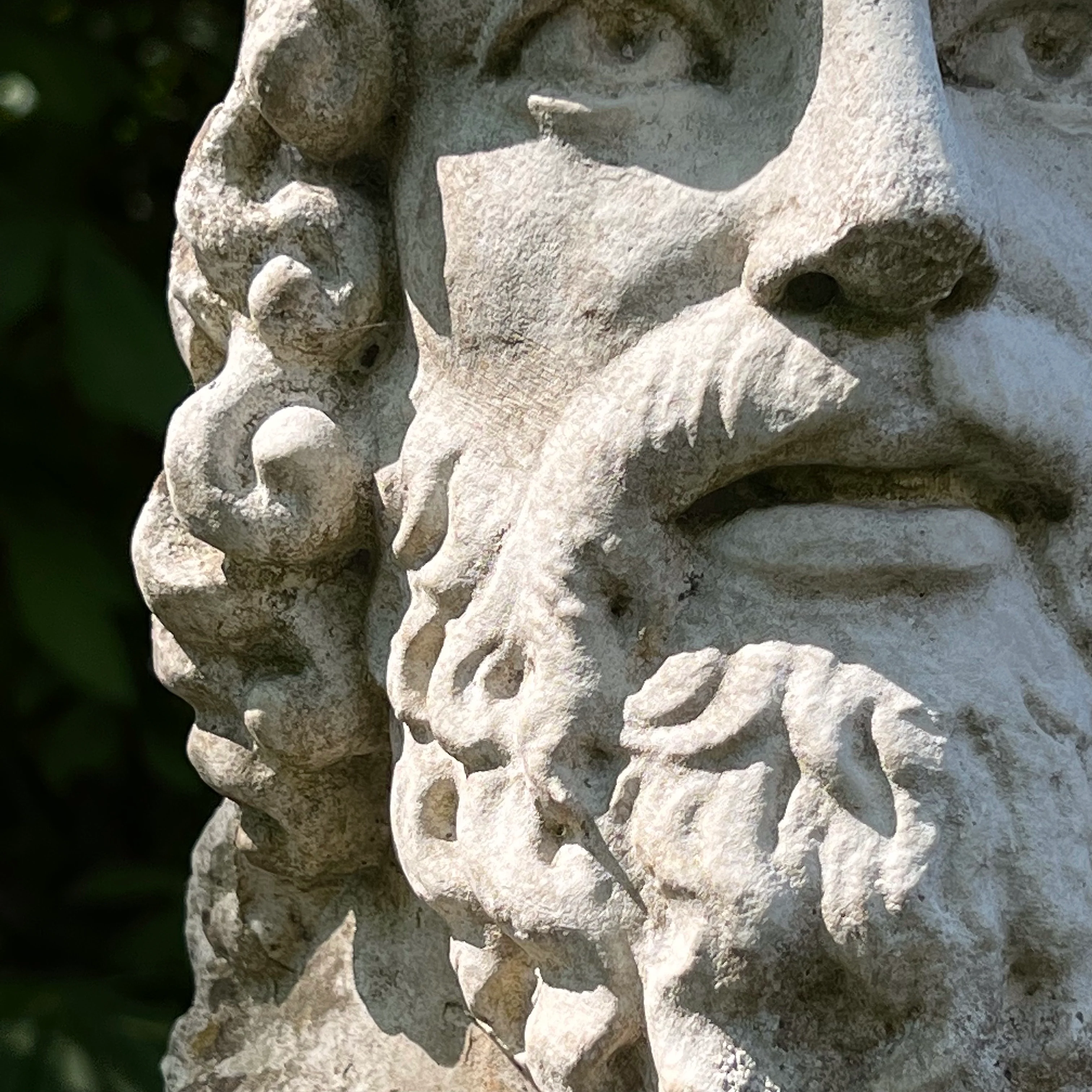
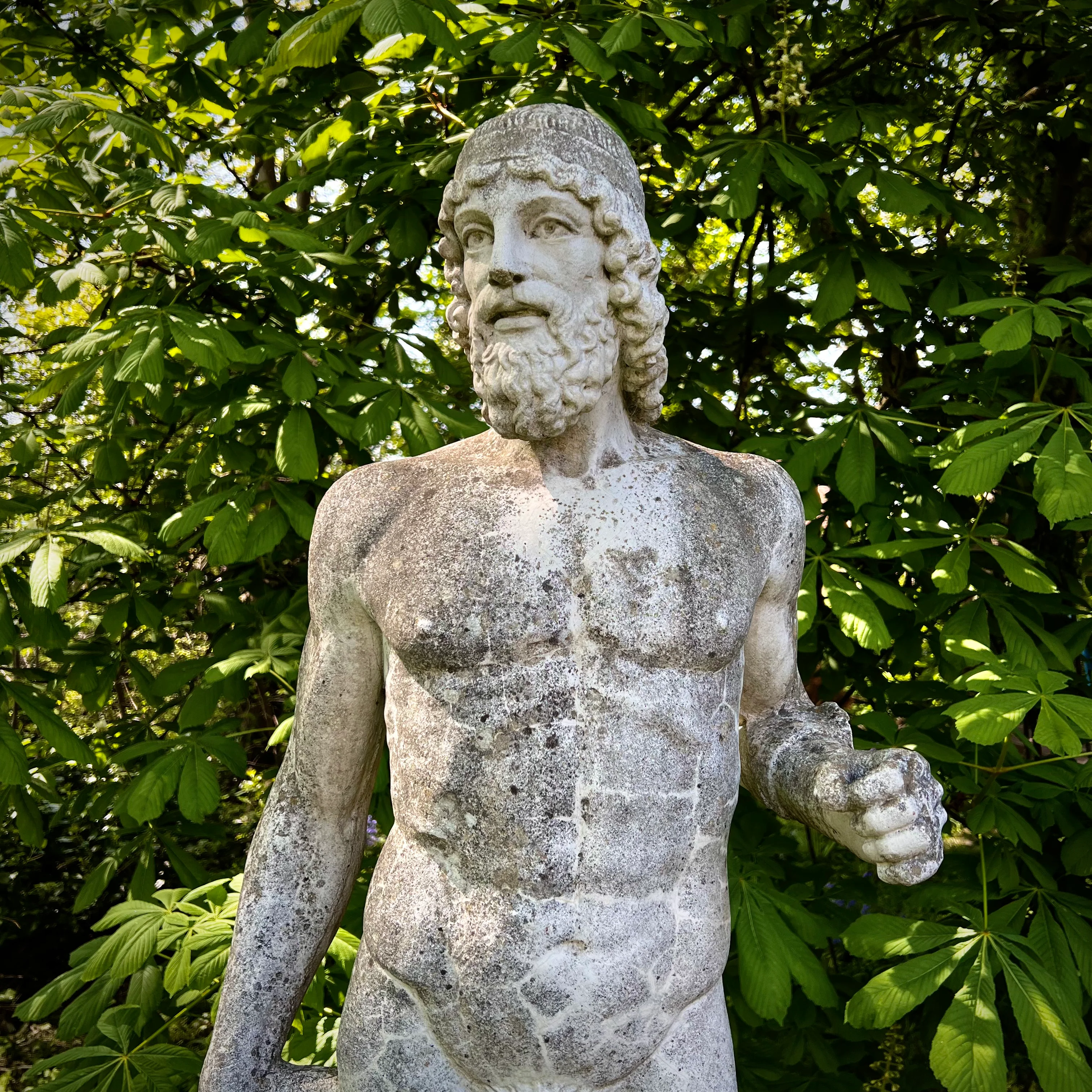
The Greek bronzes would have originally held spears and shields, our warrior grasps a lead interpretation of an appropriate weapon adding drama and realism to the sculpture.
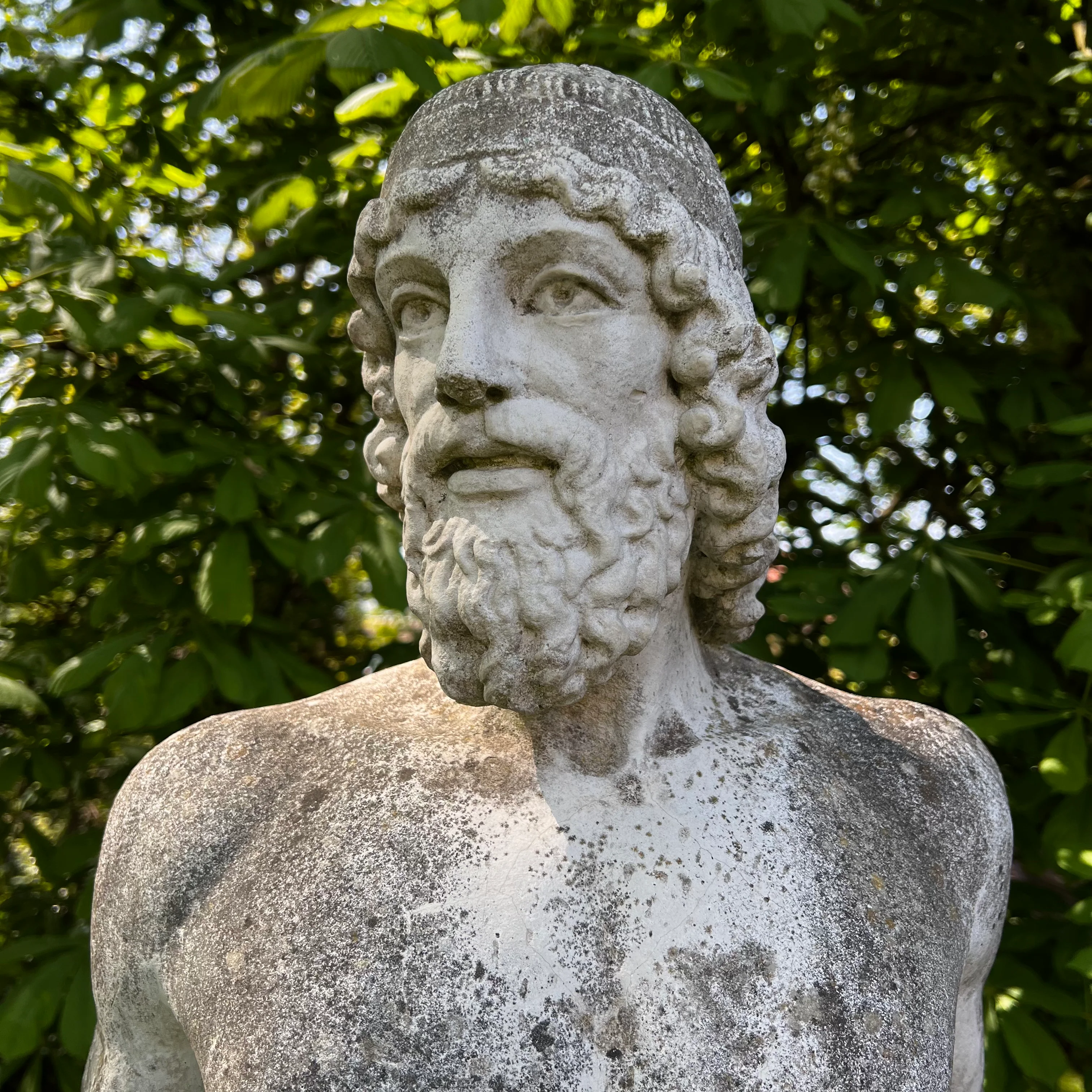
Our interpretation was created in Italy in the Early 20th Century from composite stone. The sculpture is paired with a large matching composite plinth.
Height of figure 140cm. Size listed including plinth.
Original: $5,122.69
-70%$5,122.69
$1,536.81More Images




Riace Warrior Statue with Plinth c.1920
A rare model depicting one of the Riace Warriors from Greek Classical Antiquity. c.1920
The Riace bronzes, also called the Riace Warriors, are two full-size Greek bronzes of naked bearded warriors, cast around 460–450 BC. They were discovered in the sea in 1972 near Riace, Calabria, in southern Italy. The bronzes are now housed in the Museo Nazionale della Magna Grecia in the nearby city of Reggio Calabria. They are two of a very few surviving life-scale ancient Greek bronzes. They demonstrate superb technical craftsmanship and exquisite artistic accomplishments that were able to be achieved at this period in time. They belong to a transitional period from archaic Greek sculpture to the early Classical style, disguising their idealised geometry, naturally impossible anatomy, and alluring "realistic" appearance.
The Greek bronzes would have originally held spears and shields, our warrior grasps a lead interpretation of an appropriate weapon adding drama and realism to the sculpture.
Our interpretation was created in Italy in the Early 20th Century from composite stone. The sculpture is paired with a large matching composite plinth.
Height of figure 140cm. Size listed including plinth.
Product Information
Product Information
Shipping & Returns
Shipping & Returns
Description
A rare model depicting one of the Riace Warriors from Greek Classical Antiquity. c.1920
The Riace bronzes, also called the Riace Warriors, are two full-size Greek bronzes of naked bearded warriors, cast around 460–450 BC. They were discovered in the sea in 1972 near Riace, Calabria, in southern Italy. The bronzes are now housed in the Museo Nazionale della Magna Grecia in the nearby city of Reggio Calabria. They are two of a very few surviving life-scale ancient Greek bronzes. They demonstrate superb technical craftsmanship and exquisite artistic accomplishments that were able to be achieved at this period in time. They belong to a transitional period from archaic Greek sculpture to the early Classical style, disguising their idealised geometry, naturally impossible anatomy, and alluring "realistic" appearance.
The Greek bronzes would have originally held spears and shields, our warrior grasps a lead interpretation of an appropriate weapon adding drama and realism to the sculpture.
Our interpretation was created in Italy in the Early 20th Century from composite stone. The sculpture is paired with a large matching composite plinth.
Height of figure 140cm. Size listed including plinth.